


Florida’s orange crop has fallen 96% in a generation, and nearly half the trees in Brazil’s main citrus belt now show symptoms of the same incurable disease, known as the yellow dragon and spread by a tiny insect. The industry has answered with a scattergun of fixes, and the evidence that healthier farmland helps is strikingly mixed. New field data suggest why: the link with harvests may only become statistically robust when an ecosystem’s structure, composition and function are measured and analysed together.
In October the groves around Silves are still green. The fruit hangs hard and unripe above red soil, and in a few weeks hand-painted roadside signs will read LARANJAS. It is easy, here, to believe the world is full of oranges.
The world is not (yet) running out of them: the USDA expects global output of about 45.9 million tonnes in 2025–26, slightly up on the year before. But on 9 October it forecast Florida’s 2026–27 crop at 10 million boxes, the smallest since 1929–30 and 96% below the 1997–98 peak. In Brazil, which supplies most of the world’s orange juice, the same disease is spreading through the main citrus belt.
The yellow dragon
The disease is called huanglongbing, or HLB, better known as citrus greening. A bacterium, Candidatus Liberibacter asiaticus, lives in the tree’s sap-carrying tissue, leaving fruit small, bitter and partly green while the tree declines over several years. It is highly resistant to lab culture, so drugs are hard to test, and there is still no cure.
The bacterium moves between trees inside the Asian citrus psyllid, an insect 2 to 3 mm long, so the most direct line of defence is against the insect: eliminate it, or keep its numbers low enough to stop the spread. Both insect and bacterium are invasive in the Americas. The psyllid had lived in Brazil since the 1940s when the bacterium was found there in 2004; it reached Florida in 1998, and greening followed in 2005.

Within a decade of greening’s arrival, Florida growers estimated that 80% of their trees were infected, and hurricanes battered the weakened groves. In Brazil’s main belt, nearly half the trees now show symptoms, rising to 63% in groves more than ten years old.

Europe is not known to have the disease, but both insects that carry it have reached its edges. The African citrus psyllid spread through Portugal from 2015 and reached the Algarve in 2021, and the Asian citrus psyllid was found in Cyprus in 2023 and on Rhodes in September 2026. Portugal declared its Algarve and Alentejo outbreaks eradicated in 2024 after releasing a parasitic wasp brought from South Africa, a fix that introduces one non-native species to fight another.
What it has cost growers
In today’s money, Florida’s orange crop was worth about $2.1 billion at the farm gate in 2006–07 and about $160 million in 2025–26. Prices were not the problem: what collapsed was yield, from about 300 boxes an acre in the mid-2000s to 57 in 2022–23, while spraying pushed costs up.

On an illustrative reconstruction, an average Florida acre went from earning about $1,700 above growing costs in 2011–12 to losing more than $2,000 in 2022–23 and 2023–24. By 2013–14, University of Florida budgets assumed 12 foliar sprays a year instead of two, making up 38% of the cost of growing an acre.
Brazil’s growers face a different squeeze: boom and bust, with greening spreading underneath. Drought and heat cut the 2024–25 crop by a quarter, and the shortage pushed the price of fruit to a record of about R$85 a box; the next harvest recovered by more than a quarter, and by October 2026 the price had fallen to about R$30, well below the R$45 to R$54 that Cepea estimated typical farms needed to break even. Through boom and bust alike, greening kept spreading, from 38% of the belt’s trees in 2023 to 48% in 2026: each recovery rests on fewer healthy trees, at a rising cost to keep them that way.
Walking away is not a way out. By 2016 Florida growers had abandoned about 130,000 acres, where neglected trees that are still alive keep breeding the psyllid for the farms next door, and much of the other lost land is becoming houses, solar farms and pasture. Brazilian growers are planting in neighbouring states, but a new grove takes years to come into full production, and the disease has already been found in more than 30 municipalities in Mato Grosso do Sul.

Selling land brings in money, but only once. Between 2020 and 2024 Alico, one of the largest US citrus producers, lost about $23 million on its farming and land operations before overheads while land and asset sales brought in about $200 million; it has since wound down its citrus business, and in the nine months to June 2026 it made a profit only because land sales added $25 million. Once a grove is abandoned or sold, its value as a farm is gone, and the insect is still there.
A scattergun response
The response has been a scattergun of fixes, each aimed at one part of the problem. Florida growers inject antibiotics into trunks, which suppress the bacteria without clearing them; breeders have released tolerant varieties and a gene-edited rootstock; and by 2025 more than 1,500 acres of Florida citrus grew under insect-proof screens. Growers in both countries spray the psyllid intensively, often in coordinated campaigns, and Brazil also releases a parasitic wasp where no one sprays.
These measures buy time, but none has stopped the disease, and the sprays carry a hidden cost: they also kill the psyllid’s predators. When University of Florida researchers shielded psyllid colonies from ladybirds, lacewings and spiders, each female left 5 to 27 times as many surviving offspring, while in some colonies exposed to predators every young psyllid vanished.
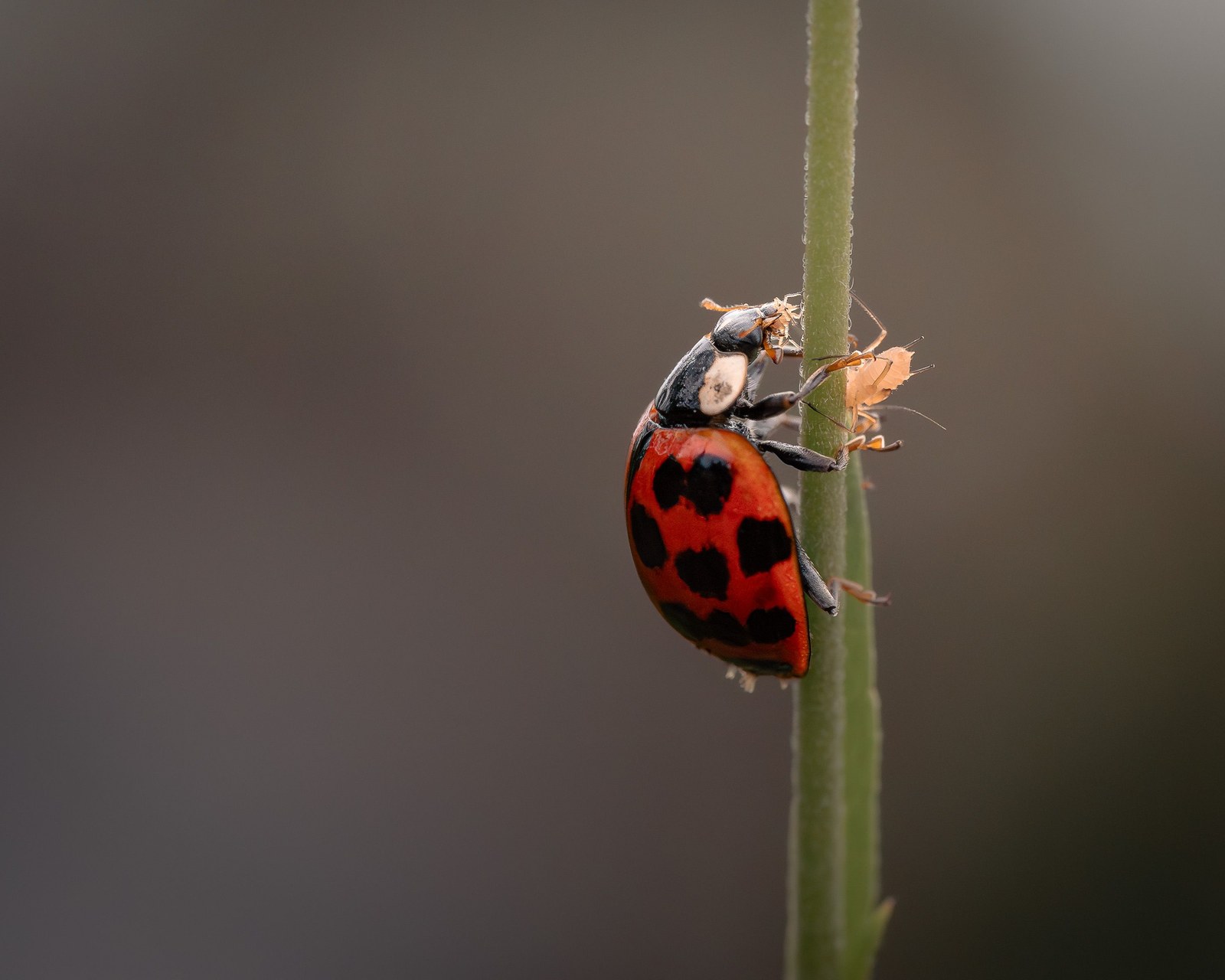
Attempts to change the landscape around farms have been just as piecemeal, and their results are mixed. In Florida, guava trees planted among oranges cut psyllid numbers, but greening spread through the groves anyway.
Other crops with insect pests tell a similarly mixed story. In Borneo, strips of riverside forest left standing inside oil palm plantations increased the rate at which predators attacked insects, but made no measurable difference to how much pests damaged the palms. In Ghana, where cocoa suffers from swollen shoot, a virus carried by tiny sap-sucking insects called mealybugs, a field trial ringed cocoa plots with citrus trees, which the virus cannot infect: after seven years only one tree in 522 behind the citrus barrier was visibly infected, against 134 behind a border of ordinary cocoa.
The clearest gains show up where researchers measure the predators themselves. On Costa Rican coffee farms, birds halved infestations of the coffee berry borer, a tiny beetle that tunnels into the coffee fruit; in Indonesia, netting that kept birds and bats off cocoa trees let plant-eating insects multiply and cut yields by 31%. Yet across 132 studies in 31 countries, the largest review of the question found that the amount of natural habitat around farms had no consistent effect on pests.
Why is the evidence so mixed?
The review’s authors standardised the data from all 132 studies and still found no consistent pattern, so the problem was not simply that researchers measured things differently. But they noted that pests and their enemies may respond to aspects of the landscape their analysis did not capture: it relied on the share of land around each farm under different land-cover types, the most common measure in such studies, which says nothing about the condition of that habitat. Each of the studies above looked at one dimension of the ecosystem around a farm: one pest or predator, one extra crop, one strip of trees, or the share of forest read off a land-cover map.
Ecosystem condition is broader: how close a place comes, in its structure, its composition (the mix of species) and its function (the work those species do), to a good-quality example of the same ecosystem, with species performing different roles and enough overlap between them to provide redundancy. Capturing all three by hand takes substantial effort and cost, but satellites, drones, cameras, camera traps and sound recorders can do much of the work, and AI can identify species in millions of calls and images, provided experts check the results. Only recently has that become practical at any scale.
When Pivotal did this on more than a hundred farms in southern Brazil, chosen by statistical design to represent a region of thousands, each farm received a condition score from 0 to 1, built from four measures covering structure, composition and function, and benchmarked against good-quality native forest nearby. Set against up to six years of yield records, farms in better condition had markedly steadier harvests: for every 0.1-point rise in the score, year-to-year yield variability was almost a quarter lower. Condition was not linked to average yields, so its value showed up as resilience.
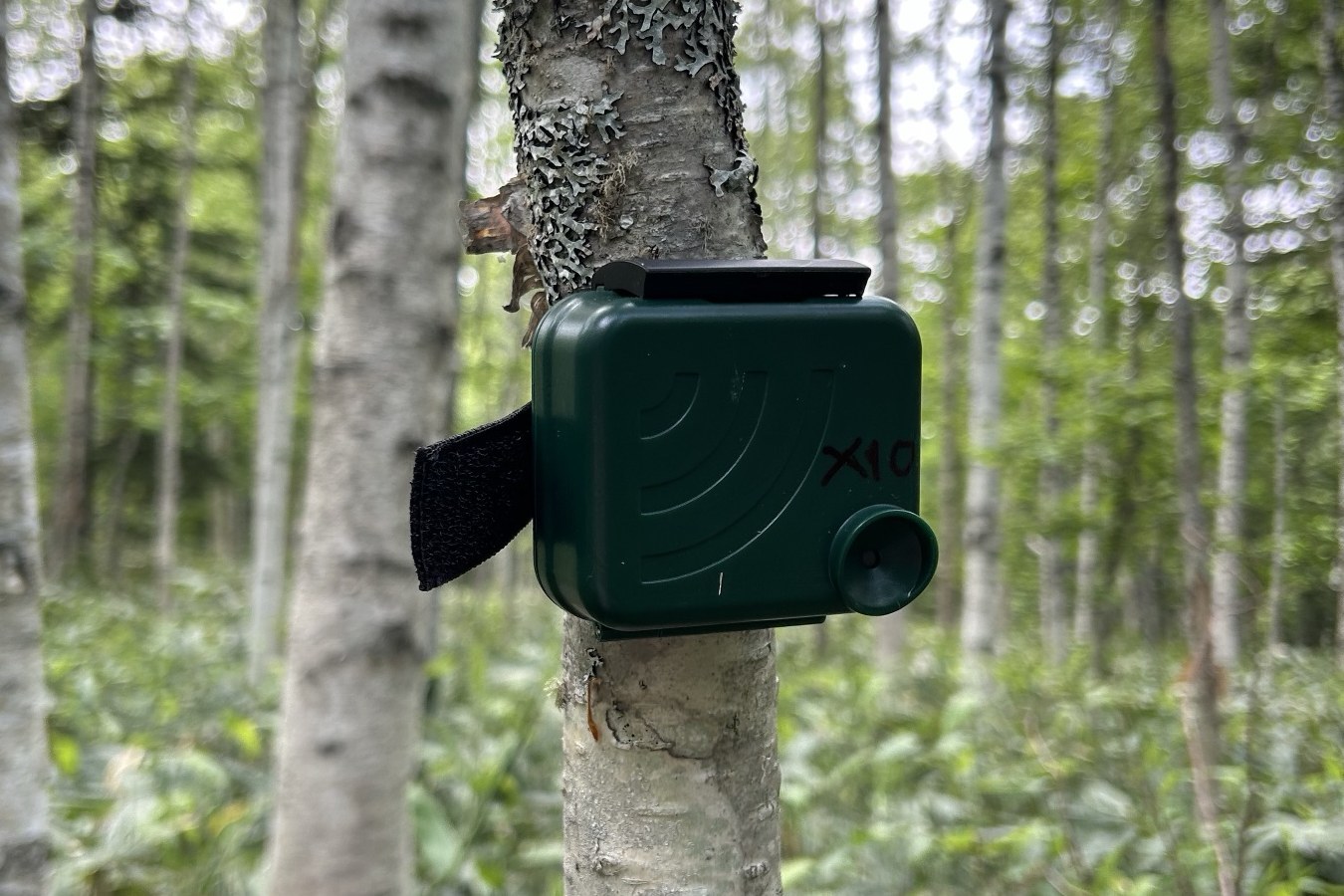
The striking result was that none of the four measures predicted yield stability on its own, including habitat structure measured from satellites; the link appeared only when structure, composition and function, drawn from satellite and ground data, were combined. A study measuring any one of them, such as forest cover or species counts, would have missed it.
This is one region and one crop, and it shows a correlation, not proof of cause. But it offers a plausible reason why studies of on-farm habitat, from hedges and forest strips to companion crops, give such mixed results: each measured one part of the ecosystem, while the link with harvests may only appear when structure, composition and function are measured together.
From scattergun to system
Better condition will not guarantee fewer pests on every farm in every season. What it appears to offer is resilience: an ecosystem with more of its structure, species and functions intact is expected to absorb shocks and recover faster, and steadier harvests are what that looks like on a farm. For growers it means fewer bad years, and for the processors and brands that buy from them, steadier supply in a market where Brazil’s crop has swung by a quarter in a single season.
Putting that to work starts with measurement. A statistically designed sample of a hundred or so farms can represent a whole supply region, and repeating it every year or two shows whether changes on the ground are working. One of the new findings from Pivotal’s work in Brazil is that condition can differ sharply between sites only 300 metres apart, so it has to be measured on the farm, not inferred from global maps.
The same data show which levers matter locally. In the Brazilian study, native forest on a farm and within 500 metres of it was linked to better condition while forest more than a kilometre away was not, and each extra year of cover cropping was linked to a condition score 2 to 3% higher.
The stakes are high. Florida’s average acre swung from a profit of about $1,700 to a loss of more than $2,000, and more than a third of growing costs went on spray programmes, including insecticides that also hit the insect’s predators. If better condition cuts spraying, or slows a vector by even a season, the payoff could be large.
Better ecosystem condition will not keep out every invader. But in the Algarve, where greening is not known to occur, there is still time to measure where each grove stands before the insect arrives.
Sources
Florida and the US
- USDA NASS, Florida citrus October forecast (2026–27), 9 Oct 2026
- USDA NASS, Florida Citrus Statistics 2024–25 and Florida Citrus Summary 2025–26 (production, yields, on-tree prices and values)
- UF/IFAS, cost of production studies for Florida citrus, 2003–04 to 2023–24; EDIS FE968, 2013–14 costs and foliar spray programme and full paper
- UF/IFAS, 2015 greening survey of Florida growers (EDIS FE983) and UF/IFAS, 2004 hurricane damage to Florida citrus
- NPR, Florida’s ‘grove graveyards’, May 2016, Slate, what is replacing Florida’s groves, Apr 2026 and Vero News, solar plant on a former grove, Sep 2019
- Alico, strategic transformation announcement, Jan 2025; annual reports (Form 10-K) for FY2024 and FY2025; quarterly report for the nine months to June 2026; figures summed from SEC XBRL company facts
- Citrus Industry, oxytetracycline grower survey, Sep 2025; UF/IFAS, greening-tolerant varieties, Apr 2025; US EPA, gene-edited rootstock approval, Apr 2026; UF/IFAS, citrus under protective screens (2025)
- US Bureau of Labor Statistics, CPI-U (series CUUR0000SA0), used for inflation adjustment
Brazil and world markets
- USDA FAS, Citrus: World Markets and Trade, Jan 2026
- Fundecitrus, 2026–27 crop forecast update, Sep 2026; FreshPlaza, São Paulo crop down 25% (2024–25); FreshPlaza, 2025–26 crop of 292.94 million boxes
- Citrus Industry, Brazil greening survey (symptomatic trees in the São Paulo and West-Southwest Minas Gerais belt), Sep 2026
- Cepea, record orange price of R$85 a box, Jun 2024; Hortifruti Brasil/Cepea, 2025–26 production costs and break-even and Cepea orange price indicator (spot price, October 2026)
- The AgriBiz, greening drives oranges to new frontiers and Canal Rural, greening found in Mato Grosso do Sul and Goiás
- Fundecitrus, Tudo sobre o greening (management manual) and Revista Cultivar, Fundecitrus parasitic wasp releases
The disease and Europe
- USDA ARS, the psyllid and greening in Florida; Ha et al. 2019, host-free biofilm culture of Candidatus Liberibacter asiaticus; Hall 2008, history and world status of the Asian citrus psyllid
- EU Implementing Regulation 2025/2247 (HLB not known to occur in the EU)
- EPPO, Trioza erytreae in Portugal, EPPO, first Algarve find, 2021, DGAV, eradication in the Alentejo and Algarve, Jul 2024 and EPPO, Tamarixia dryi (origin: South Africa)
- EPPO, Diaphorina citri found in Cyprus and FreshPlaza, detection on Rhodes, Sep 2026
Predators, habitat and the mixed evidence
- Qureshi & Stansly 2009, biotic mortality of the Asian citrus psyllid in Florida, Biological Control
- Gottwald et al. 2014, guava interplanting and HLB in Florida, Crop Protection
- Gray & Lewis 2014, riparian reserves in oil palm, Basic and Applied Ecology
- Domfeh et al. 2016, citrus barriers against cocoa swollen shoot, Plant Disease
- Karp et al. 2013, birds and coffee berry borer, Ecology Letters and Maas et al. 2013, birds and bats in cacao, Ecology Letters
- Karp et al. 2018, crop pests and predators show inconsistent responses to surrounding landscape composition (132 studies), PNAS
Analysis for this article
- Pivotal, ecosystem condition analysis of a supply chain in southern Brazil (client report, February 2026, unpublished): four sub-metrics averaged into one condition score against a native-forest reference; linear mixed-effects models of yield variability and mean yield for farms with at least two years of yield data, 2020–2025.
- Florida grower returns: USDA NASS statewide yields and on-tree prices less UF/IFAS south-west Florida growing costs (excluding harvest), adjusted to August 2026 dollars with the US CPI-U; an illustrative reconstruction, not observed farm accounts.
Photos: green oranges (top), Rafaela Freire / Pexels; Asian citrus psyllid, David Hall, USDA Agricultural Research Service; Fort Myers, Nick Adams / Pexels; ladybird, Dmytro Koplyk / Pexels; acoustic recorder, Pivotal.

MORE insights


Sign up to receive our latest insights

