
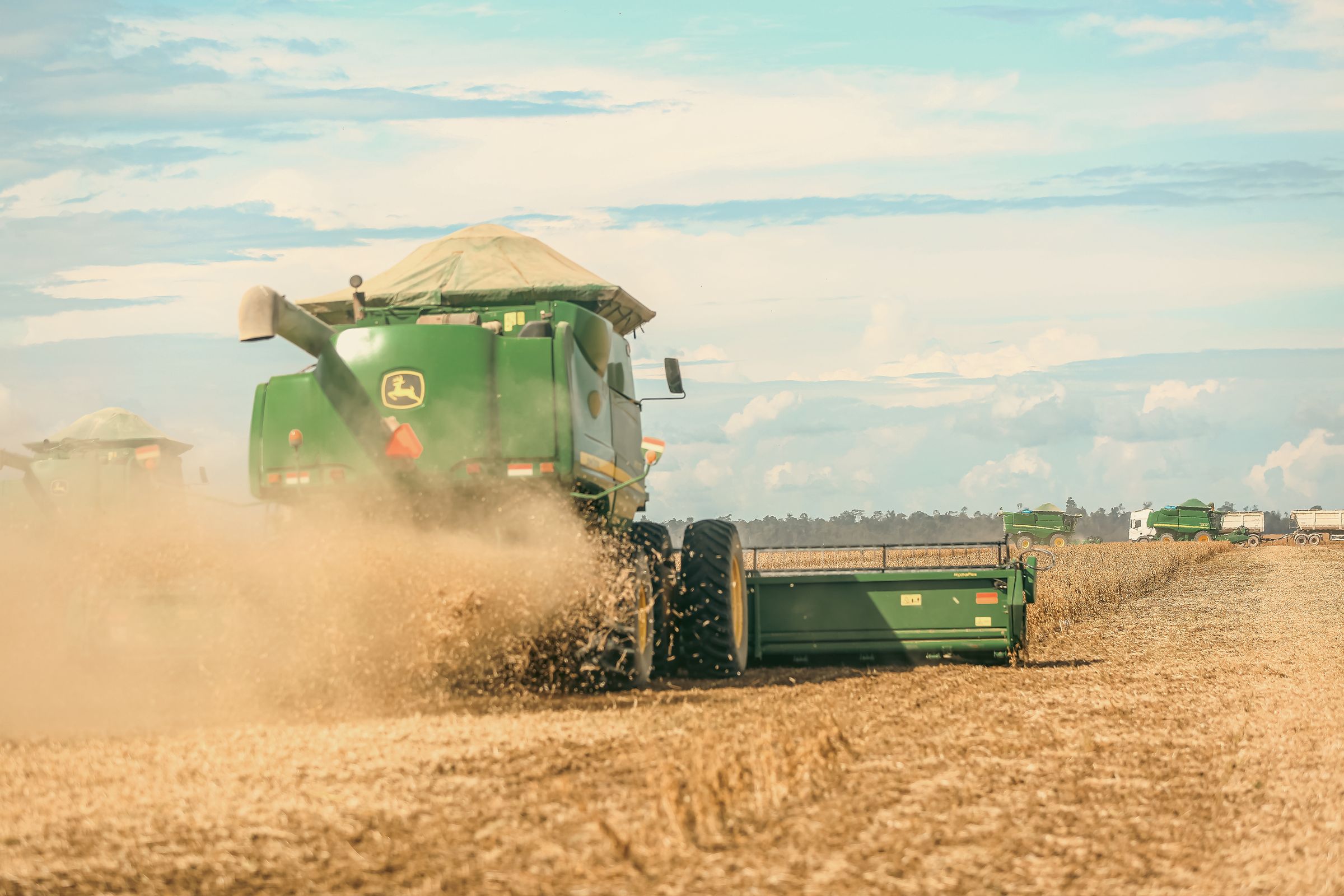


Western Europe experienced its hottest June on record in 20261. Following the heatwave, an Energy & Climate Intelligence Unit analysis valued gross downward revisions to EU and UK grain-production forecasts at €2–2.3bn2.
In Brazil, extreme heat has become a recurring shock to agriculture. After the strong 2023–24 El Niño, Brazil went through a prolonged drought amplified by extreme heat, which cut the national soy harvest by nearly 10%3. Drought in Brazil’s coffee regions pushed arabica futures past their 1977 record4. This year, drought and heat reaching 40 °C in parts of Rio Grande do Sul led the state’s rural extension service, Emater, to cut its soybean forecast by 11.3%5,6. This reduction – which is only for one region and for one commodity - equates to 2.42 million tonnes, worth approximately US$940 million at the local producer price and exchange rate in the week of the report20.
The Food and Agriculture Organization and the World Meteorological Organization now warn that a single heatwave can cut agricultural productivity by up to 50%, and that yields of staple crops such as maize and wheat are projected to fall by 4–10% for every additional degree of warming3.
For any business that depends on agricultural supply chains, the question is no longer whether heat will affect you, but how much of the harvest holds when it does. The condition of the ecosystems in and around supply farms is one of the most important factors providing resilience in the face of external pressures – like heatwaves. Retaining existing healthy ecosystems and improving the condition of farms through regenerative practices is a practical, farm-level form of climate adaptation that will become increasingly essential.
What ecosystem condition means
Ecosystem condition describes how healthy an ecosystem is: how well it functions, and how quickly it recovers from shocks7. It is comprised of three factors: composition (which species are present and in what abundances), structure (the physical structure and complexity of habitats) and function (the interwoven processes that connect everything together)7. Better condition means greater resilience: an ecosystem that is more likely to withstand a shock, and more likely to recover from it7.
How healthy ecosystems mitigate heat stress
During the 2021 Pacific Northwest heat dome, forest understoreys stayed 3 °C cooler than a nearby clear-cut8, and on coffee farms shade trees can lower canopy temperatures by 2–4 °C9. But shade on its own is not what makes a healthy ecosystem more resilient - a single-species plantation casts shade too – and they are profoundly vulnerable to environmental pressures. An ecosystem has hundreds or even thousands of functions performed by species operating in a complex network of relationships – often with species performing highly specialised functions and often with some level of overlap and redundancy between species. If one species struggles, perhaps because of excessive temperatures, another is available to perform some or all of that function. Resilience stems from a system that works as a whole, in which the living community and the soil, water and climate around it are in a functioning balance, with multiple functional redundancies7. Continuous ground cover and living roots build a soil system that takes in rain and holds it17; plants draw on that stored water and release it through their leaves, which is what cools the air beneath a canopy8; and a community of species with different roles keeps those processes running when conditions turn extreme12. In a forest experiment planted with between one and 24 tree species, the more species a stand held, the more it cooled hot days and temperature extremes – but it is not the tree species alone that created this cooling effect, they also provide the environment for a vast number of other functions to occur19. Where the system is degraded, the loop runs the other way: dry, bare soil amplifies heatwaves, and heatwaves dry the soil further10.

In Brazil, researchers estimate that 28% of farmland in the Amazon–Cerrado agricultural region has already been pushed out of its optimal climate zone, and conclude that “maintaining native vegetation is a critical part of the solution for stabilizing the regional climate”11.
The effect shows up in harvests. Pooling 46 grassland experiments, researchers found that species-rich communities lost about half as much productivity during climate extremes as species-poor ones12: it is the diversity of the whole community, with its different responses to stress, that holds production up. Across US maize counties, soils richer in organic matter, a sign of a soil that holds water, meant smaller yield losses and lower crop insurance payouts in drought years13.
Evidence from Brazil’s farms
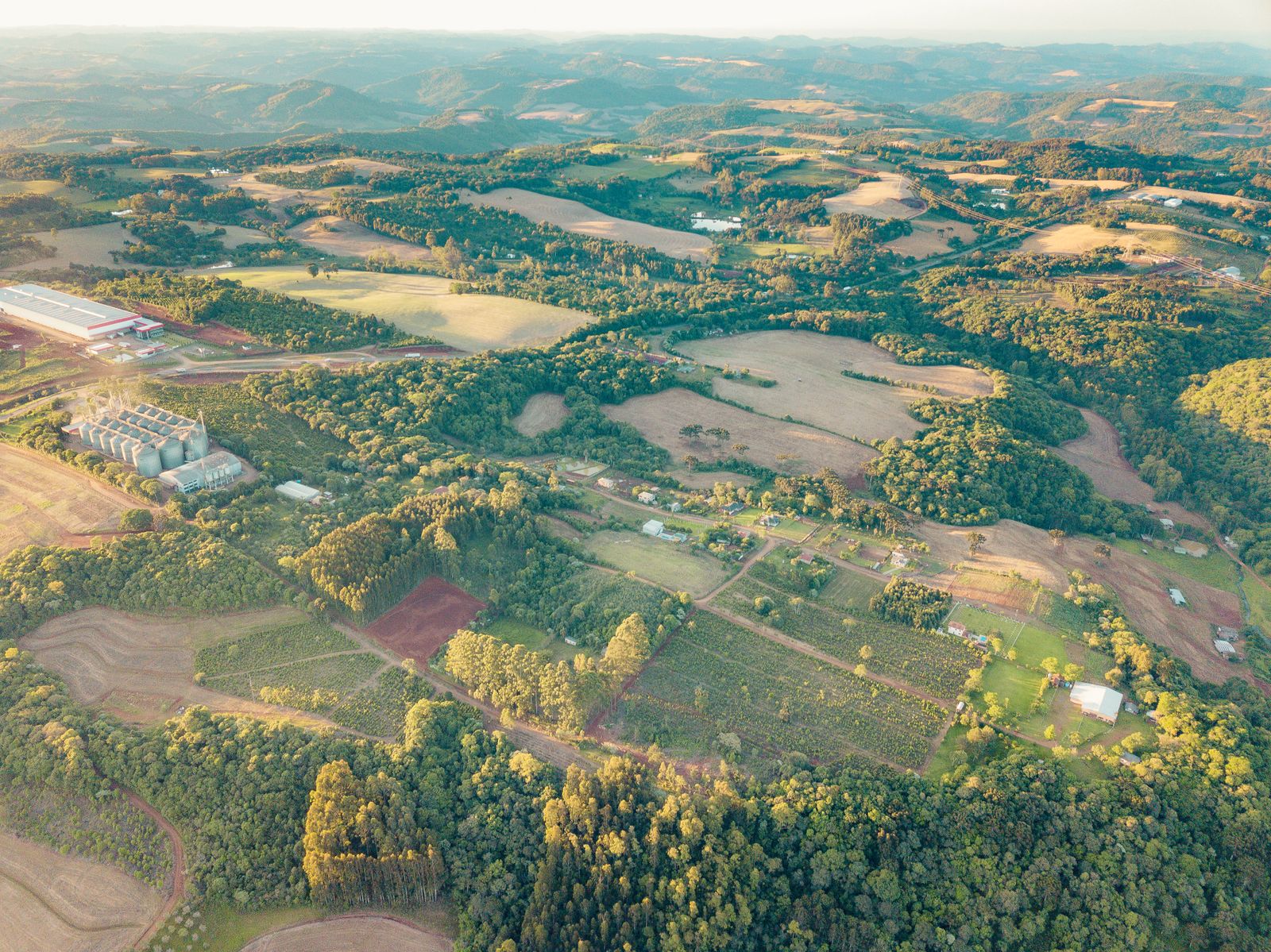
Pivotal has found the same pattern in our own agricultural supply chain work. In 2025 we assessed ecosystem condition on more than a hundred farms spread across millions of hectares of southern Brazil’s Atlantic Forest. Acoustic sensors, camera traps, ground and drone imagery and satellite data recorded hundreds of different plant and animal species, including species on the IUCN Red List, and independent expert ecologists quality-controlled the machine-learning identifications. Each farm was scored against good-quality native forest in the same ecoregion.
We compared condition with farm yield records from a period that included the 2021–22 season, when daily maximum temperatures across southern Brazil ran more than 2 °C above normal from December to February, and December and January rainfall was less than half of normal14. Farms in better ecosystem condition had steadier yields. Condition was the only factor we tested that was significantly linked to yield stability on both of our measures of variability. That link appeared only when condition was calculated as the aggregate of all three pillars, composition, structure and function, drawing on every data source together. We found that for every 10-point improvement in ecosystem condition (on a 100-point scale) relative to otherwise comparable farms, there was a double-digit percentage decrease in yield variability.
Good regenerative farming is climate adaptation – if it improves ecosystem condition
The Intergovernmental Panel on Climate Change (IPCC) lists agroforestry and farm and landscape diversification among effective adaptation options for food systems, and finds that approaches that work with natural processes, such as agroecological practices, provide benefits including the buffering of temperature extremes15. Not every practice sold as regenerative does this. The test is whether ecosystem condition on and around the farm actually improves, which is why it has to be measured rather than assumed. Better condition is what leads to greater resilience, and ultimately more stable yields and productivity in the face of pressures.
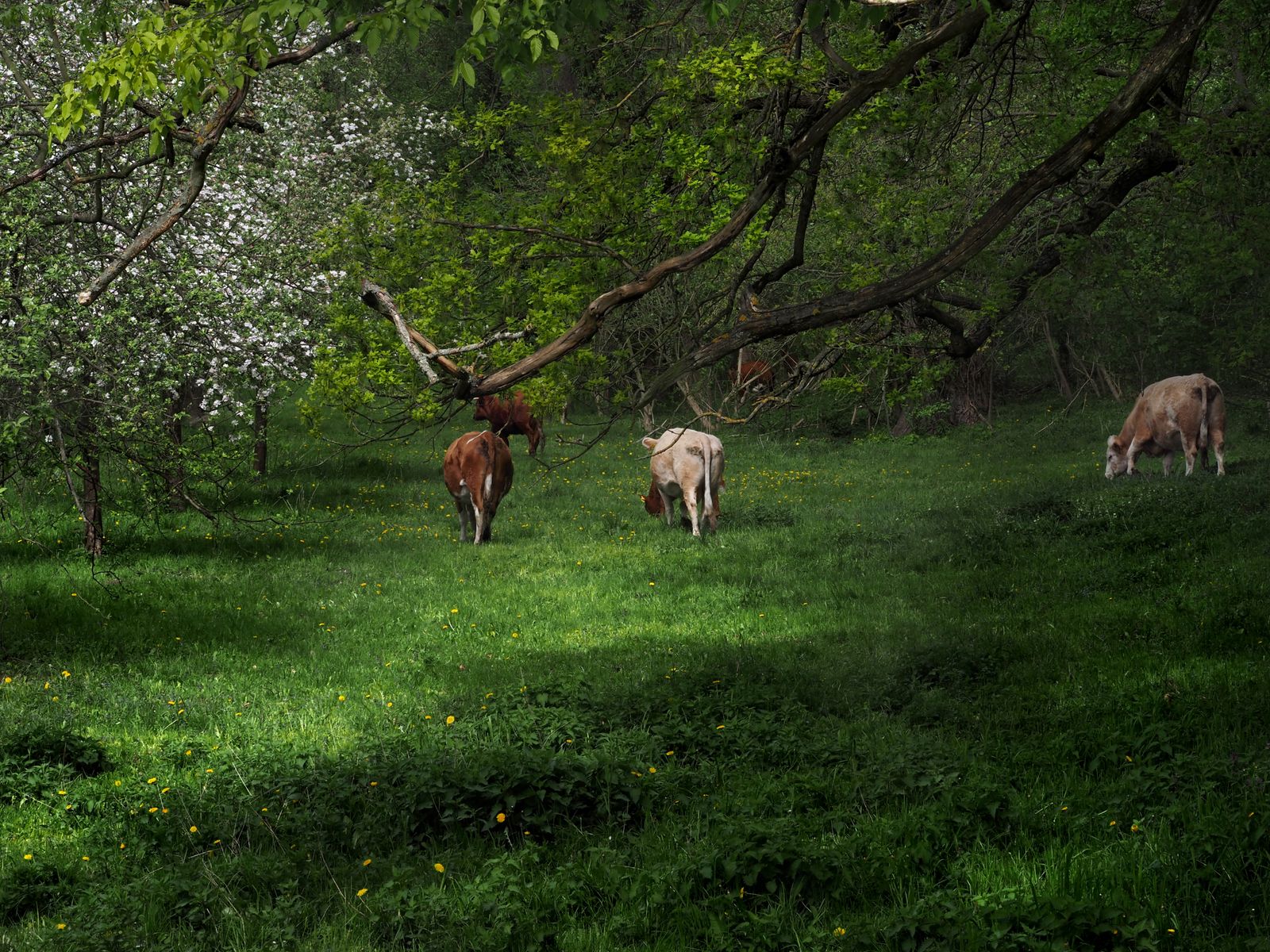
The core regenerative practices show up in the evidence. Across 32 long-term experiments in Europe and North America, species-diverse, functionally rich crop rotations more than compensated for yield losses from anomalous warm conditions and long, warm dry spells16. Cover crops raised the rate at which soils absorb water by about a third on average, and introducing perennials such as agroforestry raised it by nearly 60%, improving the water available to crops when heat and drought set in17.
Stable yields make sound business sense
Yield stability is where ecosystem condition reaches the bottom line. Farms in better condition deliver steadier yields, and steadier yields mean more predictable supply, fewer shortfalls to cover at short notice and less exposure to the price spikes that follow failed harvests4.
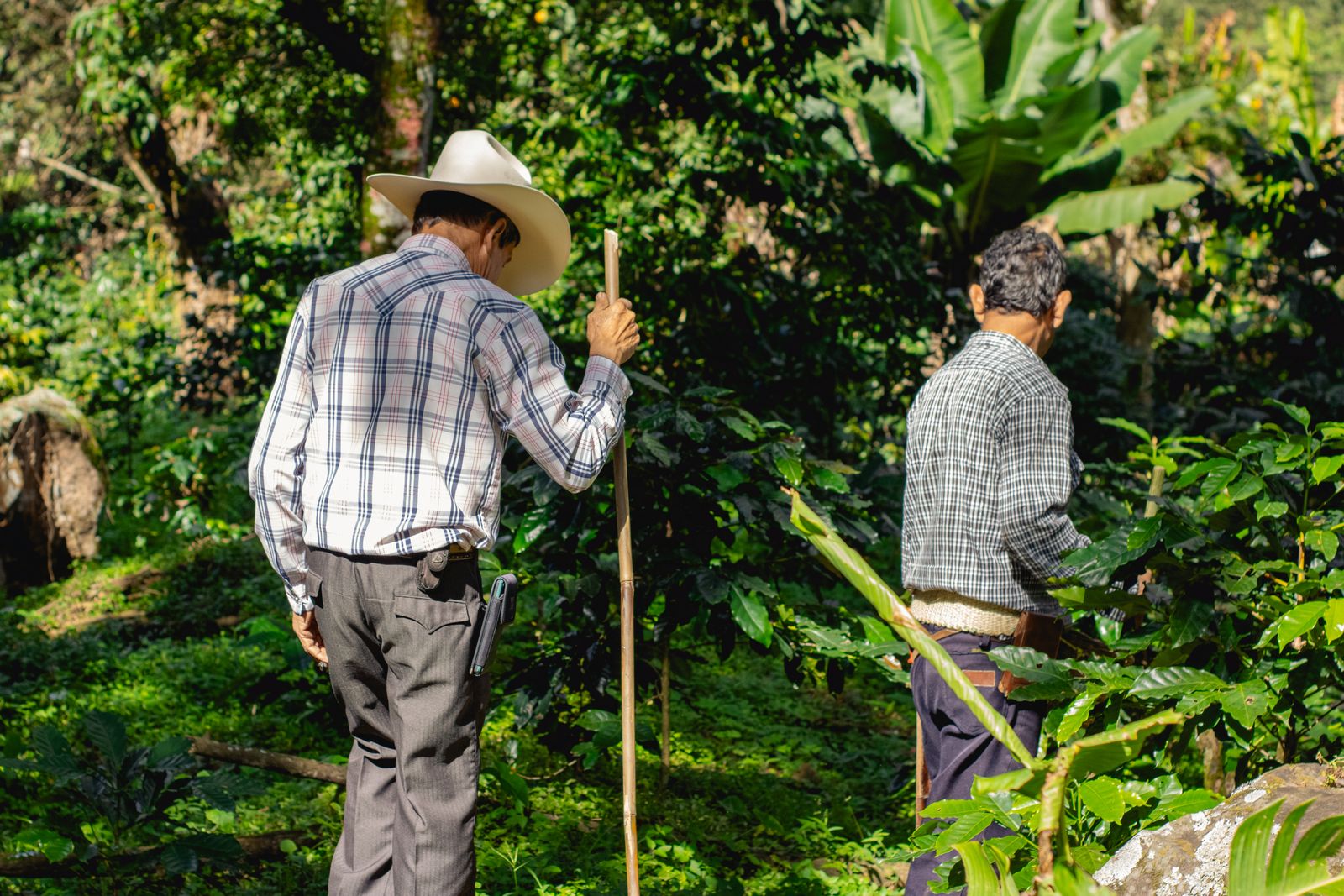
Heat will keep breaking records in Europe, in Brazil and across every major growing region, and each hot season will test the ecosystems behind the harvest. Ecosystem condition can now be measured across entire supply chains, so companies can see where it is strong, where it is slipping and where investment in regenerative practices, from cover cropping and diverse rotations to agroforestry and retaining native vegetation, will do the most.
Climate adaptation protects the bottom line. For companies that depend on agricultural supply chains, it makes sound business sense, protecting both their future supply and their future profitability. Set against the cost of lost harvests and wildly variable yields, investing in regenerative farming to maintain and improve the condition of the ecosystems in and around agricultural supply chains is money well spent.
References
- Copernicus Climate Change Service (2026). Record heatwave brings hottest June for western Europe during second-warmest June globally. https://climate.copernicus.eu/copernicus-record-heatwave-brings-hottest-june-western-europe-during-second-warmest-june-globally
- Carbon Brief (2026). How this summer’s heat and drought impacted crops in Europe – in six charts (citing ECIU analysis). https://www.carbonbrief.org/how-this-summers-heat-and-drought-impacted-crops-in-europe-in-six-charts
- World Meteorological Organization. FAO and WMO report highlights extreme heat risks for agriculture. https://wmo.int/media/news/fao-and-wmo-report-highlights-extreme-heat-risks-agriculture
- NPR (17 December 2024). Coffee prices soar after drought in Brazil. https://www.npr.org/2024/12/17/nx-s1-5228008/coffee-prices-brazil-drought-weather
- Revista Cultivar (12 February 2026). RS Safra 2025/26: estiagem reduz potencial da soja (reporting Emater/RS). https://revistacultivar.com.br/noticias/rs-safra-2025-26-estiagem-reduz-potencial-da-soja
- O Sul (11 March 2026). Estiagem reduz a estimativa da safra de verão no Rio Grande do Sul (reporting Emater/RS-Ascar: 21.440 to 19.017 million tonnes). https://www.osul.com.br/estiagem-reduz-a-estimativa-da-safra-de-verao-no-rio-grande-do-sul/
- Pivotal (2026). Why ecosystem condition is a boardroom issue. https://www.pivotal.earth/insights/ecosystem-condition-boardroom-issue
- Forest canopy cover affects microclimate buffering during an extreme heat event (2024). Environmental Research Communications 6: 091015. https://iopscience.iop.org/article/10.1088/2515-7620/ad7705
- Patil, S. et al. (2025). Mitigating climate risks in coffee production through agroforestry: global evidence from a systematic review and meta-analysis. Frontiers in Climate 7: 1699037. https://www.frontiersin.org/articles/10.3389/fclim.2025.1699037
- Dynamical system metrics and weather regimes explain the seasonally-varying link between European heatwaves and the large-scale atmospheric circulation (2026). Earth System Dynamics 17: 265. https://esd.copernicus.org/articles/17/265/2026/
- Rattis, L. et al. (2021). Climatic limit for agriculture in Brazil. Nature Climate Change 11: 1098–1104. https://www.nature.com/articles/s41558-021-01214-3
- Isbell, F. et al. (2015). Biodiversity increases the resistance of ecosystem productivity to climate extremes. Nature 526: 574–577. https://www.nature.com/articles/nature15374
- Kane, D. A. et al. (2021). Soil organic matter protects US maize yields and lowers crop insurance payouts under drought. Environmental Research Letters 16: 044018. https://iopscience.iop.org/article/10.1088/1748-9326/abe492
- Moody’s RMS (21 November 2022). Persistent La Niña conditions aggravate drought-associated crop losses in southern Brazil in 2021–22. https://www.moodys.com/web/en/us/insights/insurance/persistent-la-nina-conditions-aggravate-drought-associated-crop-losses-in-southern-brazil-in-2021-22.html
- IPCC (2022). Climate Change 2022: Impacts, Adaptation and Vulnerability. Working Group II fact sheet: Food and water. https://www.ipcc.ch/report/ar6/wg2/downloads/outreach/IPCC_AR6_WGII_FactSheet_FoodAndWater.pdf
- Costa, A. et al. (2024). Crop rotational diversity can mitigate climate-induced grain yield losses. Global Change Biology 30: e17298. https://onlinelibrary.wiley.com/doi/full/10.1111/gcb.17298
- Basche, A. D. & DeLonge, M. S. (2019). Comparing infiltration rates in soils managed with conventional and alternative farming methods: a meta-analysis. PLOS ONE 14: e0215702. https://journals.plos.org/plosone/article?id=10.1371/journal.pone.0215702
- IISD (2 December 2024). Challenges to fostering low-carbon agriculture through public policies and support in Brazil. https://www.iisd.org/articles/policy-analysis/low-carbon-agriculture-brazil
- Schnabel, F. et al. (2025). Tree diversity increases forest temperature buffering via enhancing canopy density and structural diversity. Ecology Letters 28: e70096. https://onlinelibrary.wiley.com/doi/10.1111/ele.70096
- Brum, A. L. / CEEMA–UNIJUI (12 March 2026). Comentários referentes ao período entre 06/03/2026 e 12/03/2026, pp. 2–3. Emater’s weekly mean producer price: R$119.69 per 60 kg sack; exchange rate: about R$5.15 per US dollar. Author’s calculation: 2.423 million tonnes × (119.69 ÷ 0.06) ÷ 5.15 = US$938.5 million, rounded to US$940 million. https://projetos.unijui.edu.br/ceema/0590

MORE insights



Sign up to receive our latest insights

